8 Movements and a Claude Glass
8Mobements:
2026 / Variable-channel video installation / B&W / Silent / Loop
2026 / Variable-channel video installation / B&W / Silent / Loop
Claude Glass:
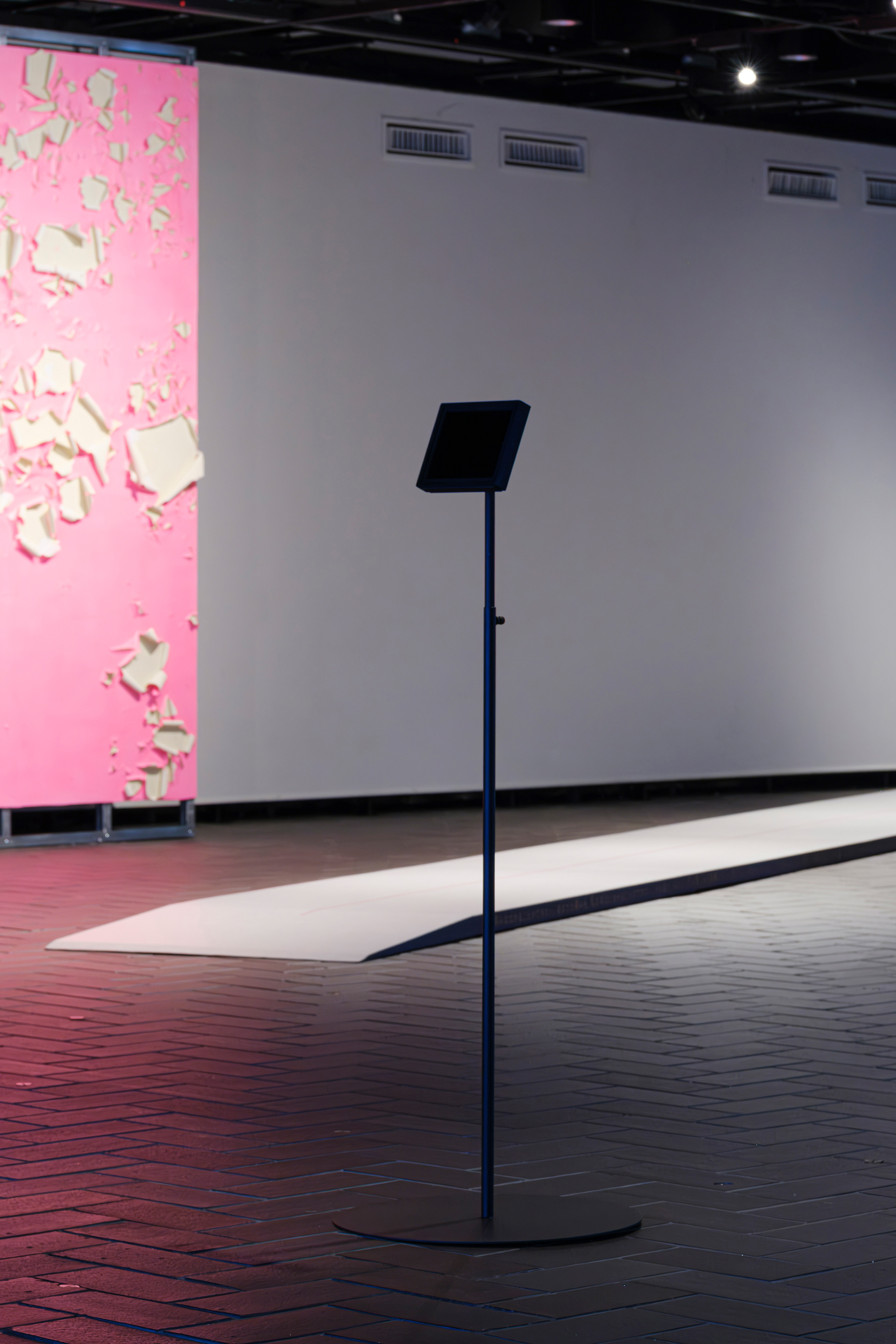
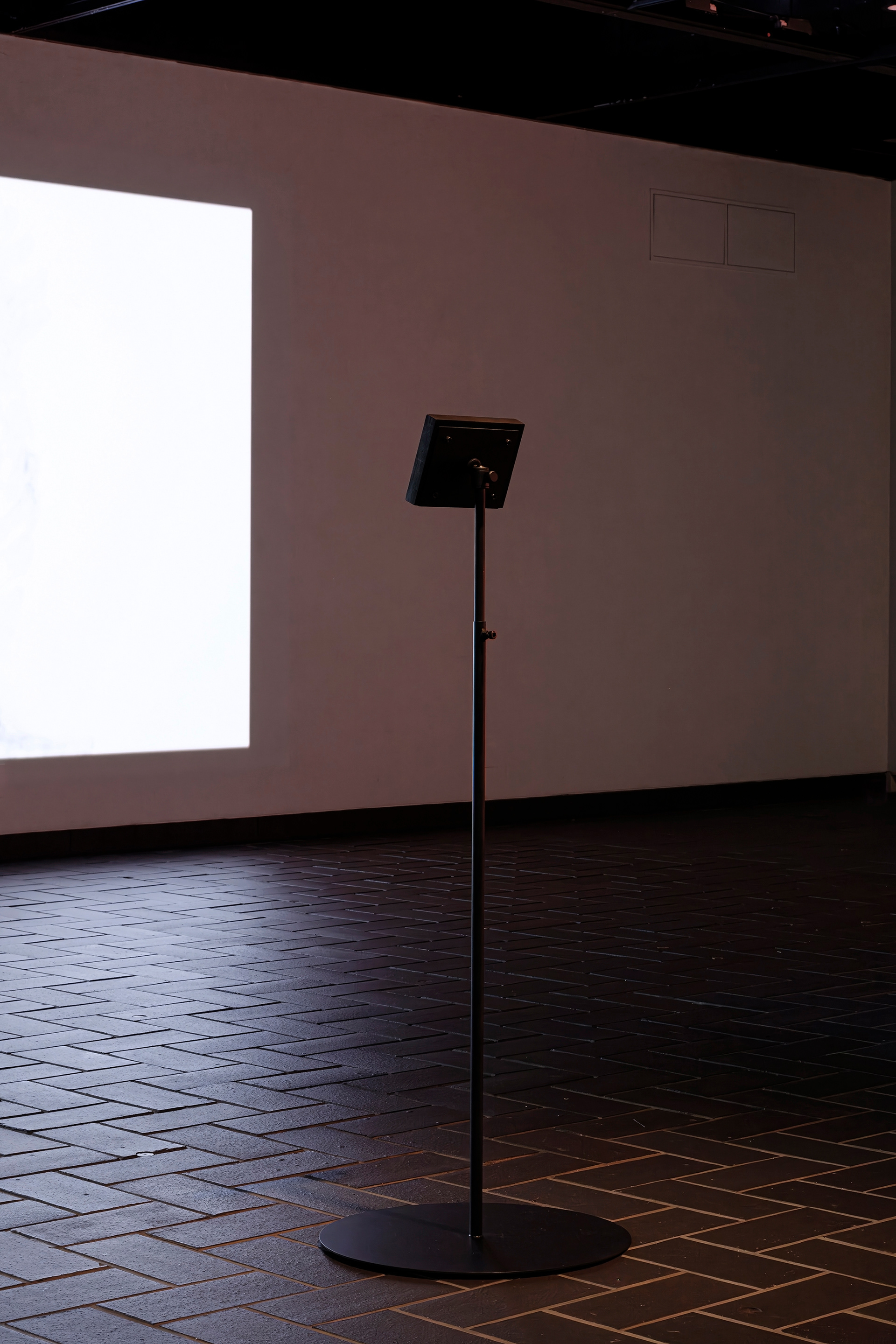
2026 / Wood, Black Mirror, Iron / 14×18×2.5cm (Mirror), φ48×100cm (stand)
2026 / Wood, Black Mirror, Iron / 14×18×2.5cm (Mirror), φ48×100cm (stand)
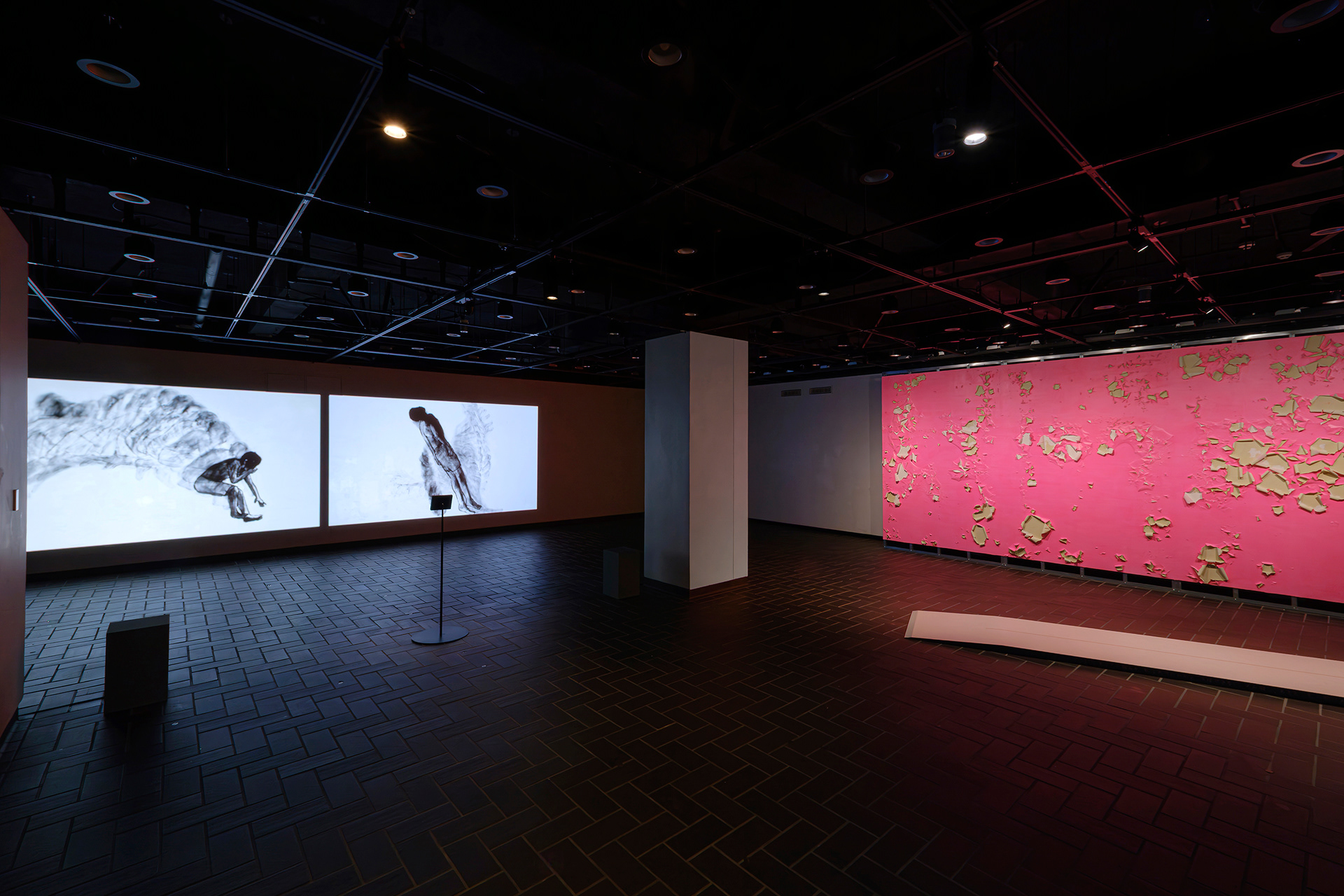
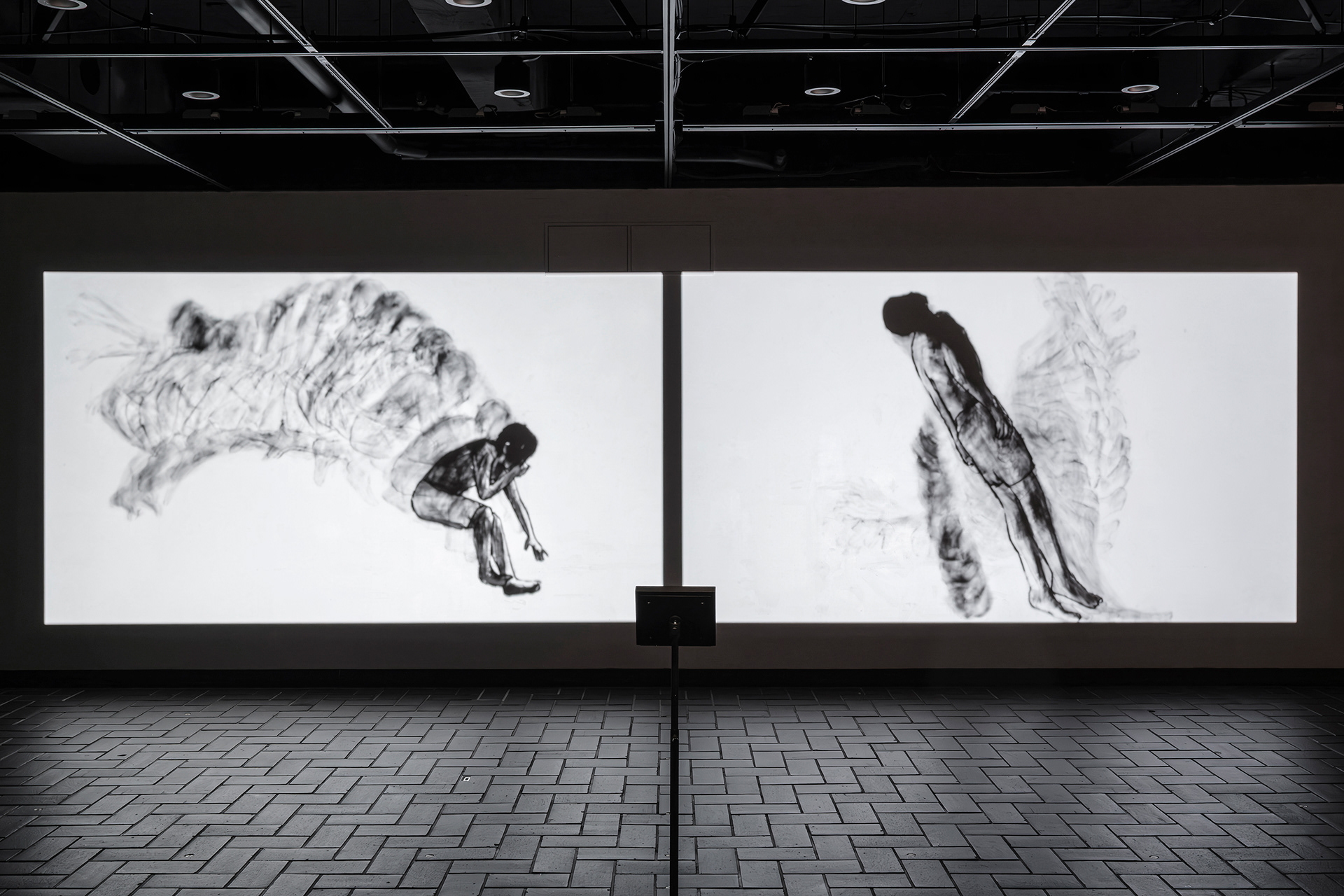
本作は、水中へと身体を投じるダイブを記録した実写映像を、木炭で1コマずつトレースすることで制作したアニメーションとクロード・グラスによるインスタレーションである。アニメーションは、1つのダイブにつき1枚の紙のみを使用し、描いては消す過程を撮影することで、身体は水中に姿を消しても、紙面には運動の痕跡が幾重にも残されていく。また、水中へと消えていくその直前、水面には飛び込む身体像が映っていたのかもしれない。これに併置するのは、18世紀に風景鑑賞のために用いられた小型の凸面ブラックミラー「クロード・グラス」である。風景を暗いトーンに変換し、凸面であることから構図を凝縮するこの鏡は、風景に背を向け、反射像を覗き込むというパラドキシカルな鑑賞行為を伴う。本作では、この鏡に映るモノトーンの風景を、運動や記憶を現在から眺め直すための装置として再解釈する。鏡面には、アニメーションの反射像とともに、それを見つめる鑑賞者自身の姿も映り込む。
水中へと消えてゆく身体を眺めるうちに、鑑賞者自身もまたひとつの像となる。
This installation brings together a charcoal rotoscope animation, created by tracing live-action footage of bodies diving into water frame by frame, and a Claude glass. For each dive, the animation is created using a single sheet of paper. Through the repeated process of drawing, erasing, and photographing, traces of movement accumulate in layers on the paper, even as the body disappears beneath the water. Just before disappearing, the diver's image may have been reflected on the surface of the water. Alongside the animation is a Claude glass, a small convex black mirror used in the 18th century for viewing landscapes. By rendering landscapes in darker tones and compressing their compositions through its convex surface, the mirror invites a paradoxical act of looking: turning one's back on the landscape to gaze at its reflection. In this work, the mirror is reinterpreted as a device for looking back at movement and memory from the present. Its surface reflects not only the animation but also the figure of the viewer watching it.
This installation brings together a charcoal rotoscope animation, created by tracing live-action footage of bodies diving into water frame by frame, and a Claude glass. For each dive, the animation is created using a single sheet of paper. Through the repeated process of drawing, erasing, and photographing, traces of movement accumulate in layers on the paper, even as the body disappears beneath the water. Just before disappearing, the diver's image may have been reflected on the surface of the water. Alongside the animation is a Claude glass, a small convex black mirror used in the 18th century for viewing landscapes. By rendering landscapes in darker tones and compressing their compositions through its convex surface, the mirror invites a paradoxical act of looking: turning one's back on the landscape to gaze at its reflection. In this work, the mirror is reinterpreted as a device for looking back at movement and memory from the present. Its surface reflects not only the animation but also the figure of the viewer watching it.
As the viewer watches a body disappear beneath the water, they too become an image.

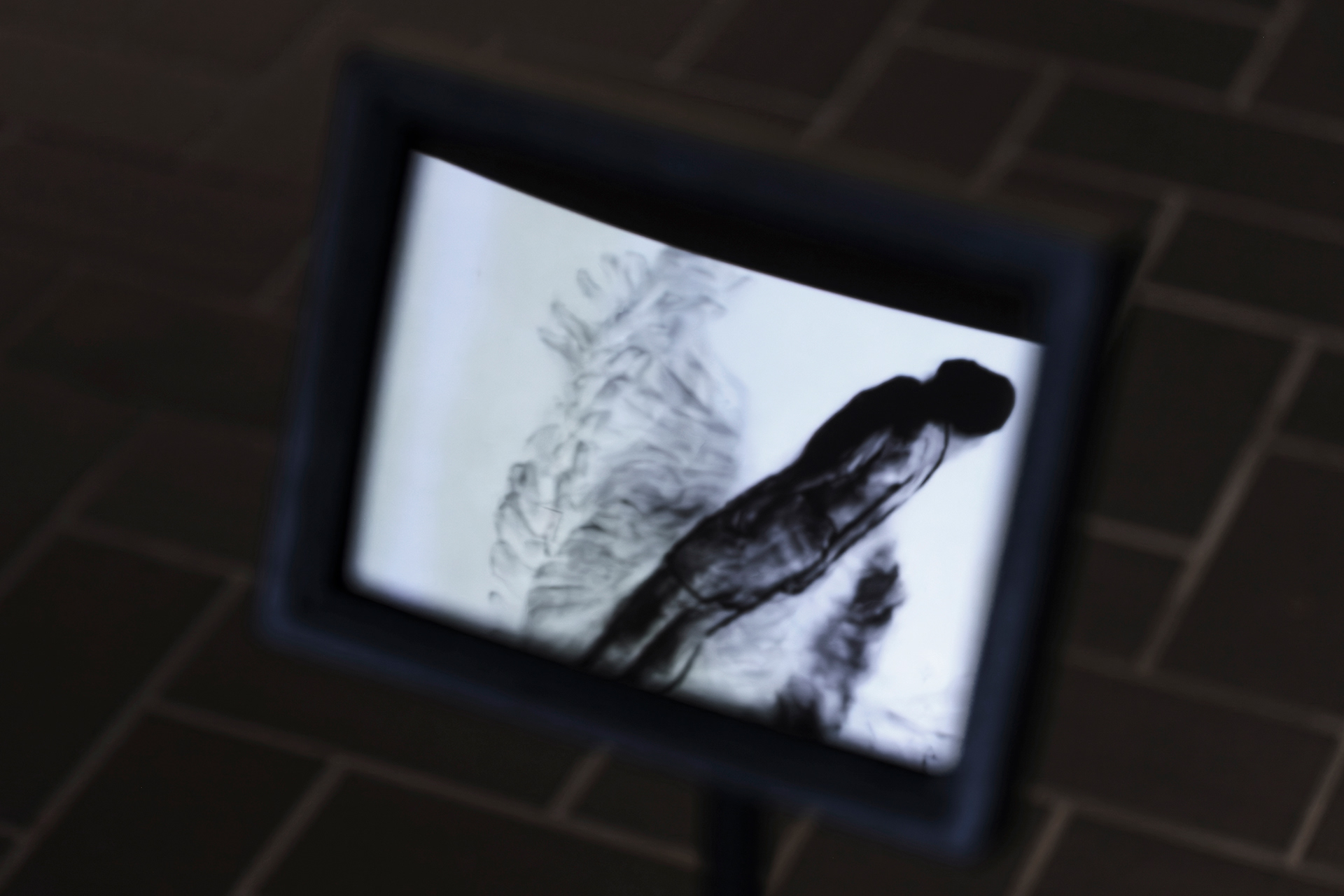
installation view "bbbdabada" at Tokyo Metropolitan Art Museum (Tokyo, Japan)